
























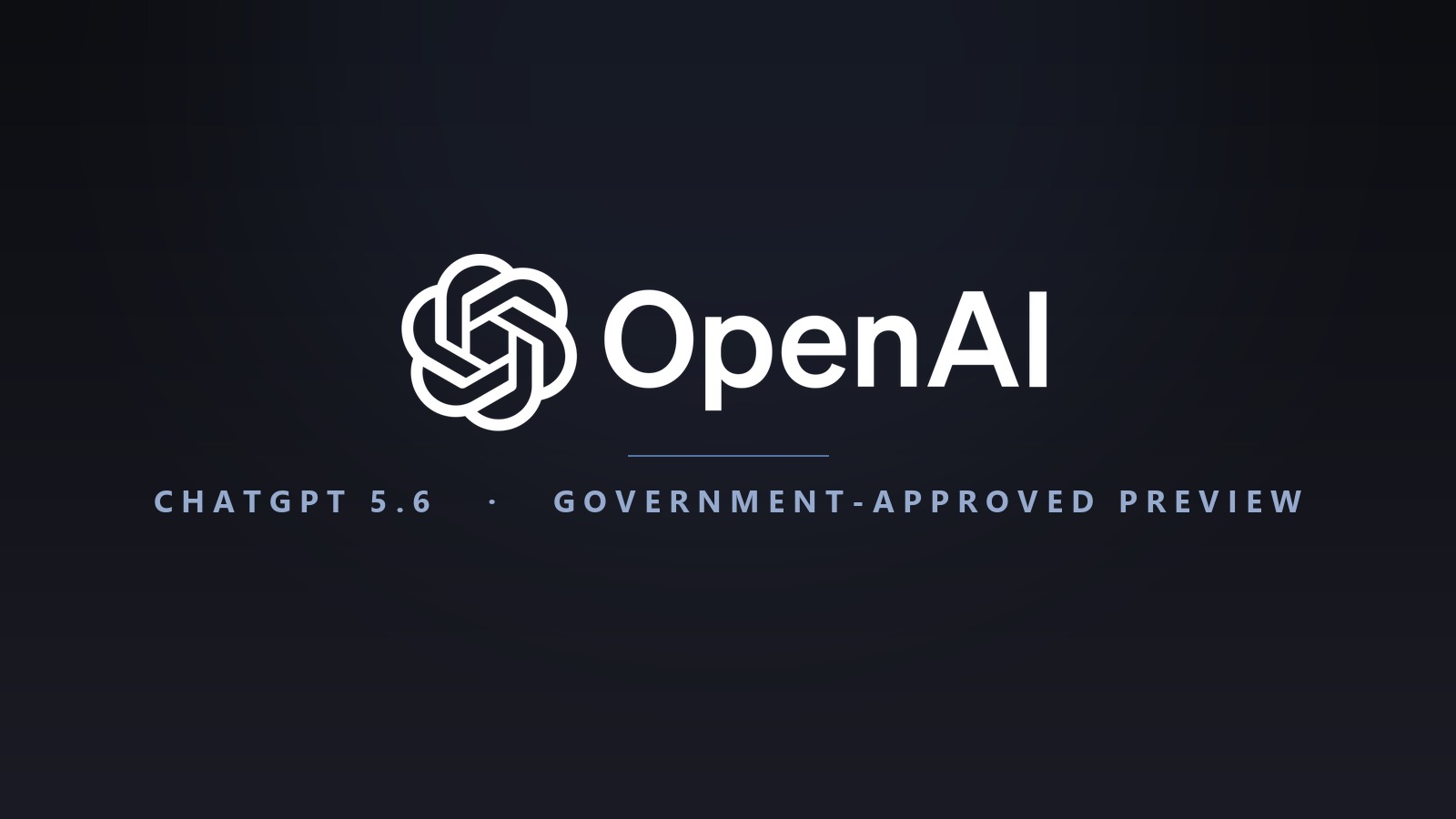
OpenAI’s next model is launching behind a government gate. The Information reports that OpenAI will first release ChatGPT 5.6 only to government-approved customers. A wider public rollout would follow about two weeks later. The unusual step came at the request of the White House.
What OpenAI is reportedly doing
The details come from a staff memo by CEO Sam Altman, shared during a company Q&A. The Information reported its contents. In it, Altman said the government is approving access “customer by customer.” So instead of a normal public launch, a small group of vetted partners gets ChatGPT 5.6 first. Everyone else waits roughly two weeks. Importantly, OpenAI has not posted an official announcement, and it has not said which customers qualify.
Why the government is involved
This traces back to an executive order President Trump signed earlier in June. It asks AI companies to take part in a voluntary federal review of their most powerful models before public release. Notably, the framework for that review does not exist yet. Even so, several agencies are already weighing in. They include the National Cyber Director’s office, the Office of Science and Technology Policy, and Commerce Secretary Howard Lutnick. The word “voluntary” is doing a lot of work here. After all, the practical result is a release OpenAI did not choose.
Altman is not thrilled
Altman made his discomfort plain. “We’ve made clear to the US government that this is not our preferred long-term model,” he wrote. He added that the company would seek “a more sustainable approach for future releases.” In other words, OpenAI is complying for now. Still, it clearly does not want this to become the default.
A pattern, not a one-off
OpenAI is not the first lab to hit this wall. The same playbook just played out when a US government order forced Anthropic to pull Fable 5 and Mythos 5. It also builds on OpenAI’s own earlier deal to let the government review its frontier models. Taken together, these moves point to a new normal. Washington now keeps a hand on the release valve for the most capable AI systems. Whether that becomes a careful safety check or a slow, opaque gatekeeper is the real question. For now, with no published framework, it leans toward the latter.